SAFETY PRACTICES
SAFETY FIRST
Best Practices in Construction, Trenching and Utility Installation
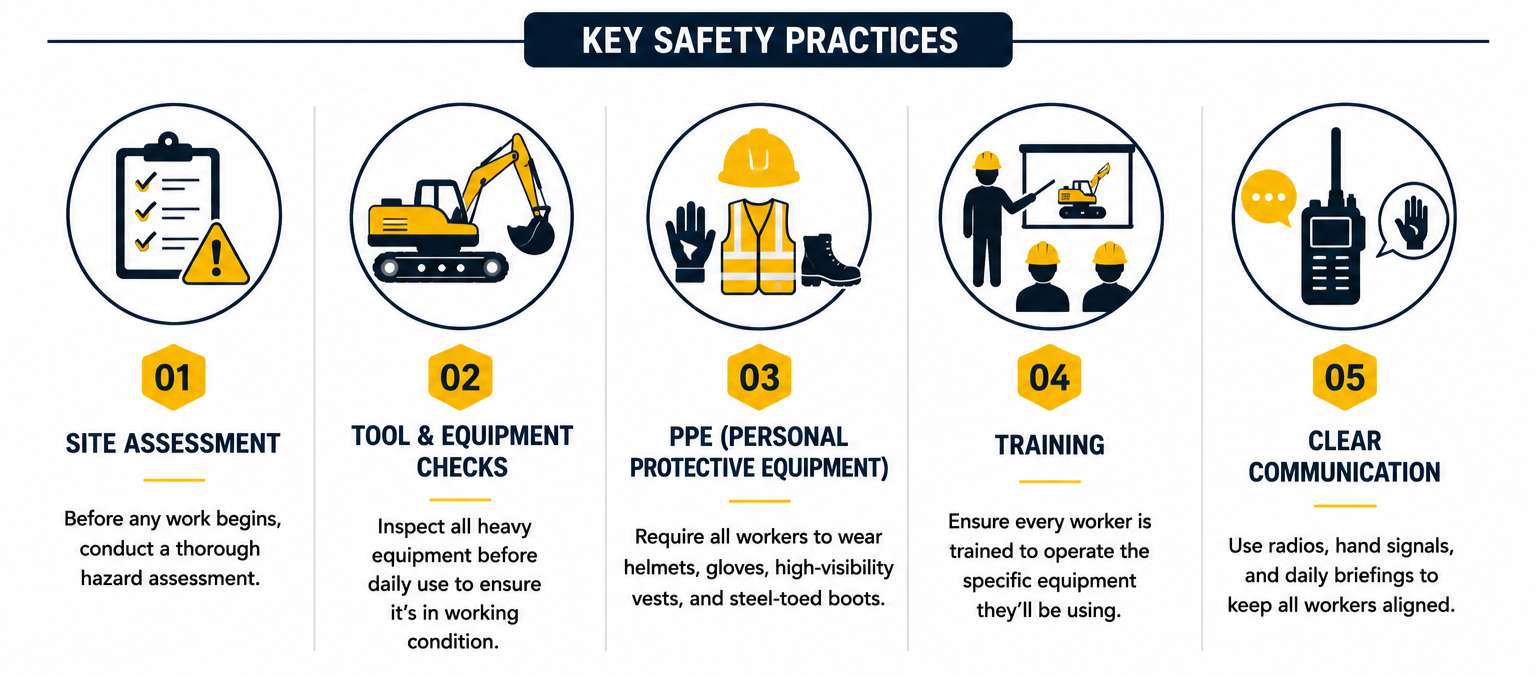
In the construction industry, safety is not a luxury—it’s a necessity. Whether it’s new builds, trenching, fencing, or erecting windbreaks, the proper use of heavy equipment and tools can mean the difference between a job well done and a dangerous incident. Safety in construction is a comprehensive approach that includes proper planning, employee training, equipment maintenance, and adherence to regulatory standards. In this article, we explore the best safety practices across key sectors like trenching, fencing, and windbreak installations and how construction teams can ensure safety remains at the forefront of every project.
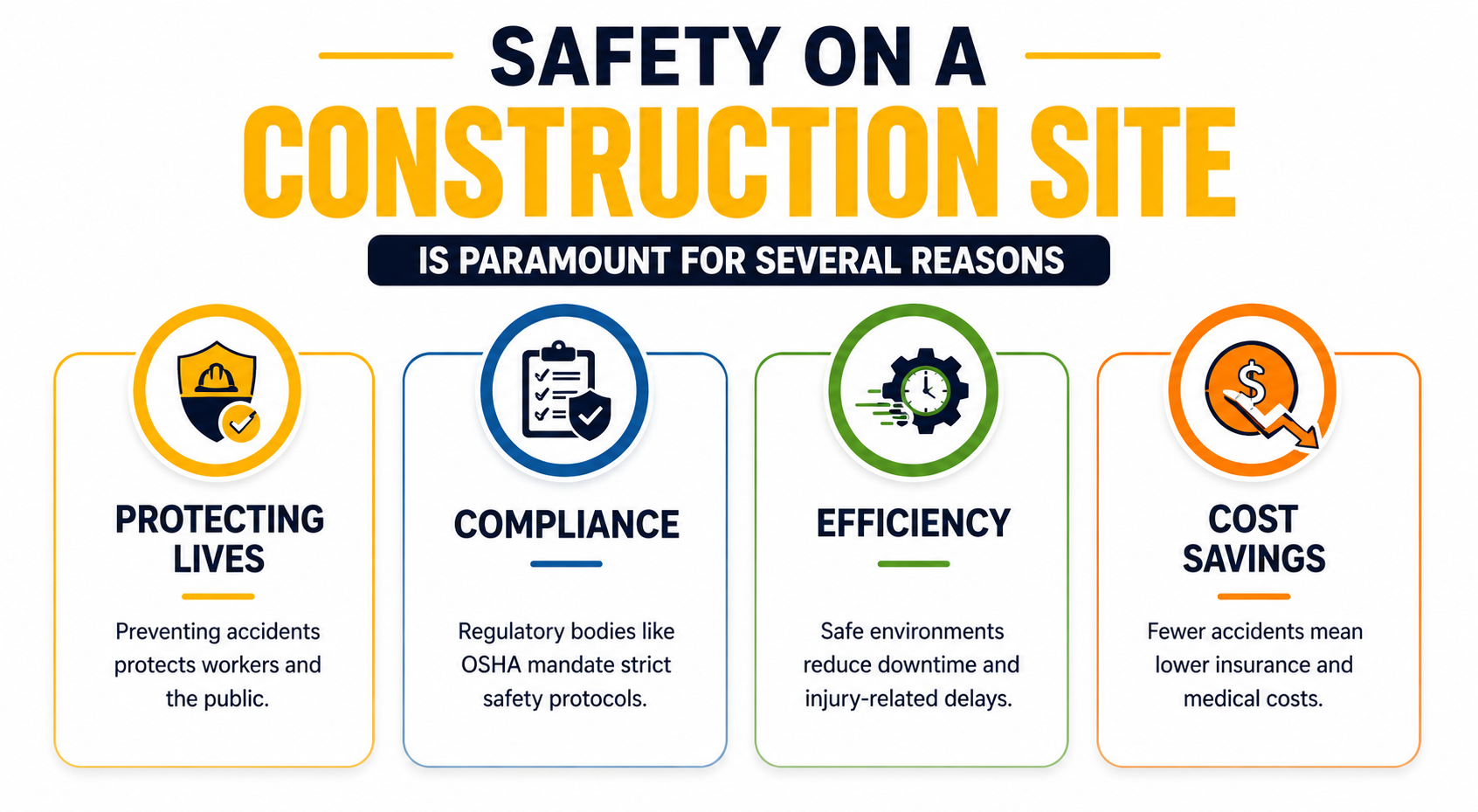
Whether it’s a small fencing job on a rural property or a large-scale new build in a growing community, every project must begin with a safety-first mindset.
Best Safety Practices for New Builds
New builds involve everything from excavation to framing and final finishes. Because multiple phases require different types of equipment and teams, it’s crucial to maintain consistency in safety protocols.
Trenching Safety: Avoiding One of Construction’s Most Dangerous Jobs
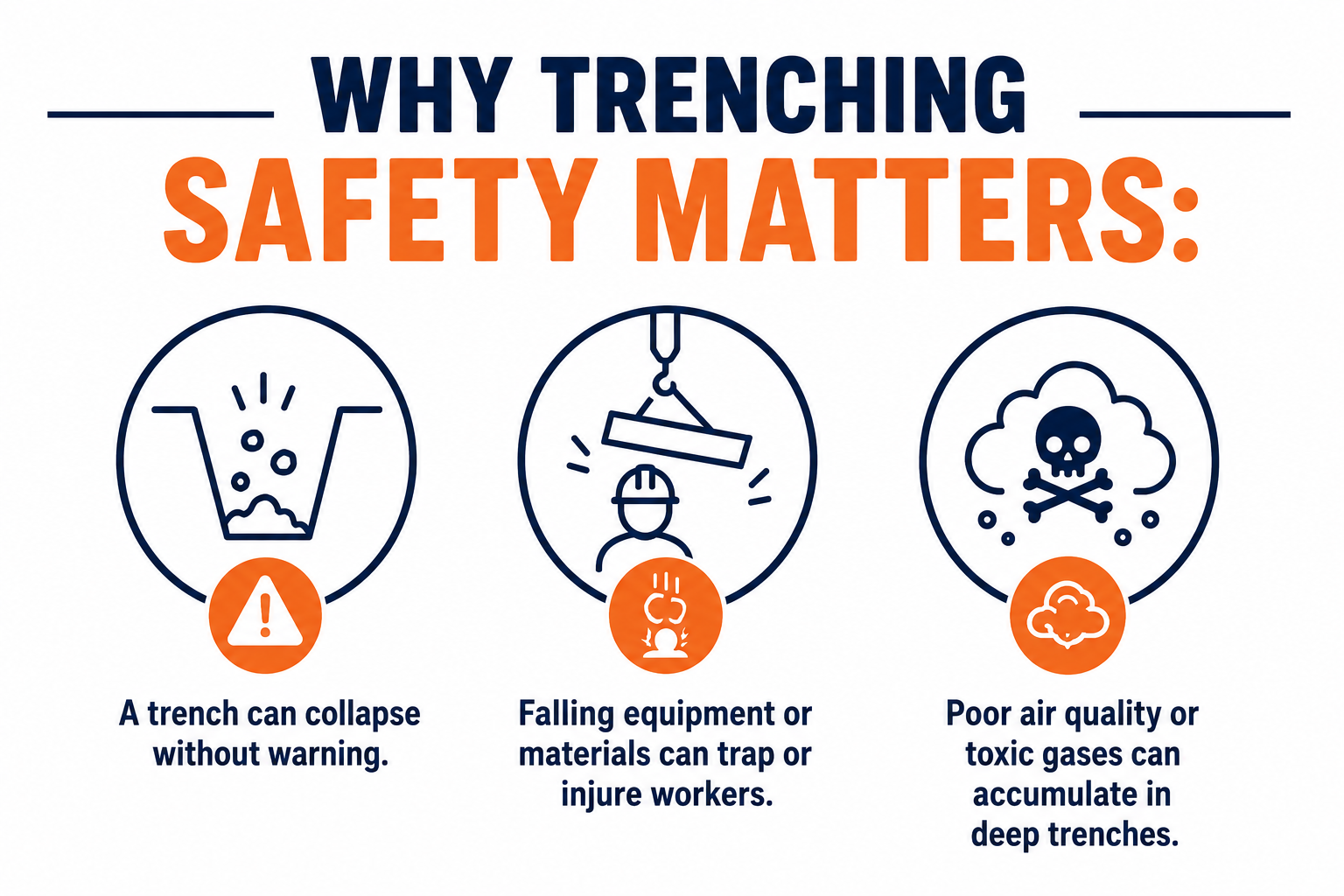
Trenching is essential in construction, particularly for installing utility lines, water systems, and foundational supports. However, it's one of the most hazardous construction activities.
Trenching Safety Best Practices:
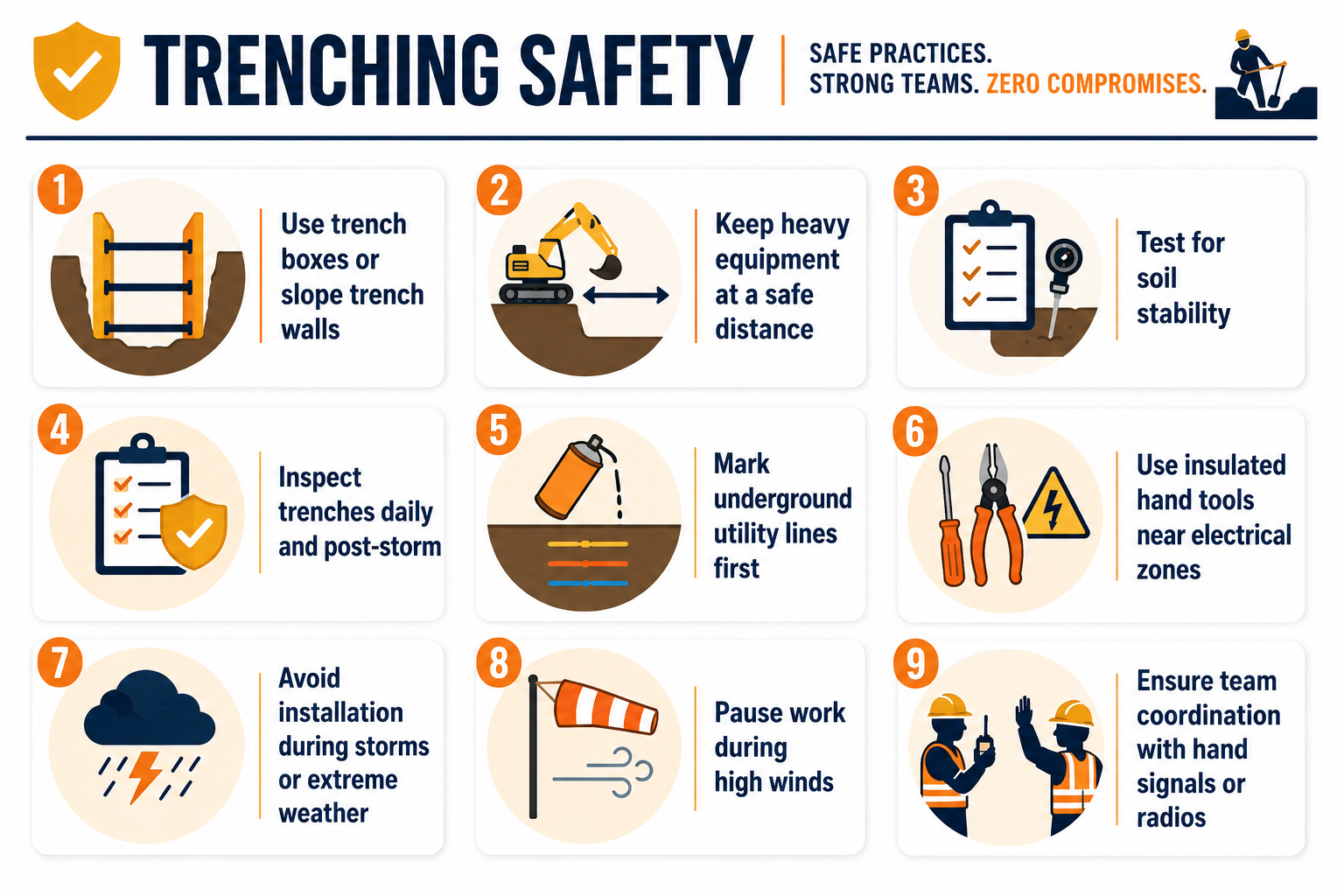
Slope or Shore Trenches: Always slope trench walls or use trench boxes/shoring to prevent collapses.
Daily Inspections: Have a competent person inspect trenches daily and after every weather event.
Access and Egress: Ladders or steps must be placed within 25 feet of all workers.
Heavy Equipment Awareness: Ensure operators know the location of trenches to prevent driving too close and causing a collapse.
Soil Testing: Identify soil type and moisture content before excavation begins.
Adhering to these best practices minimizes risks and ensures trenching tasks are completed safely and efficiently.
Safe Construction Projects
Safety Considerations:
Underground Utility Checks: Always call for utility marking services before digging.
Tool Safety: Use insulated hand tools when working near electrical lines.
Ergonomics: Use correct lifting techniques or machinery for heavy materials to avoid back injuries.
Weather Awareness: Wind and lightning can create hazards when handling metal tools or wire fencing.
When done right, awareness of safety can create a more secure construction environment.
Cultivating a Safety Culture in Construction
A culture of safety doesn’t just rely on hard hats and warning signs—it begins with leadership and involves every worker.
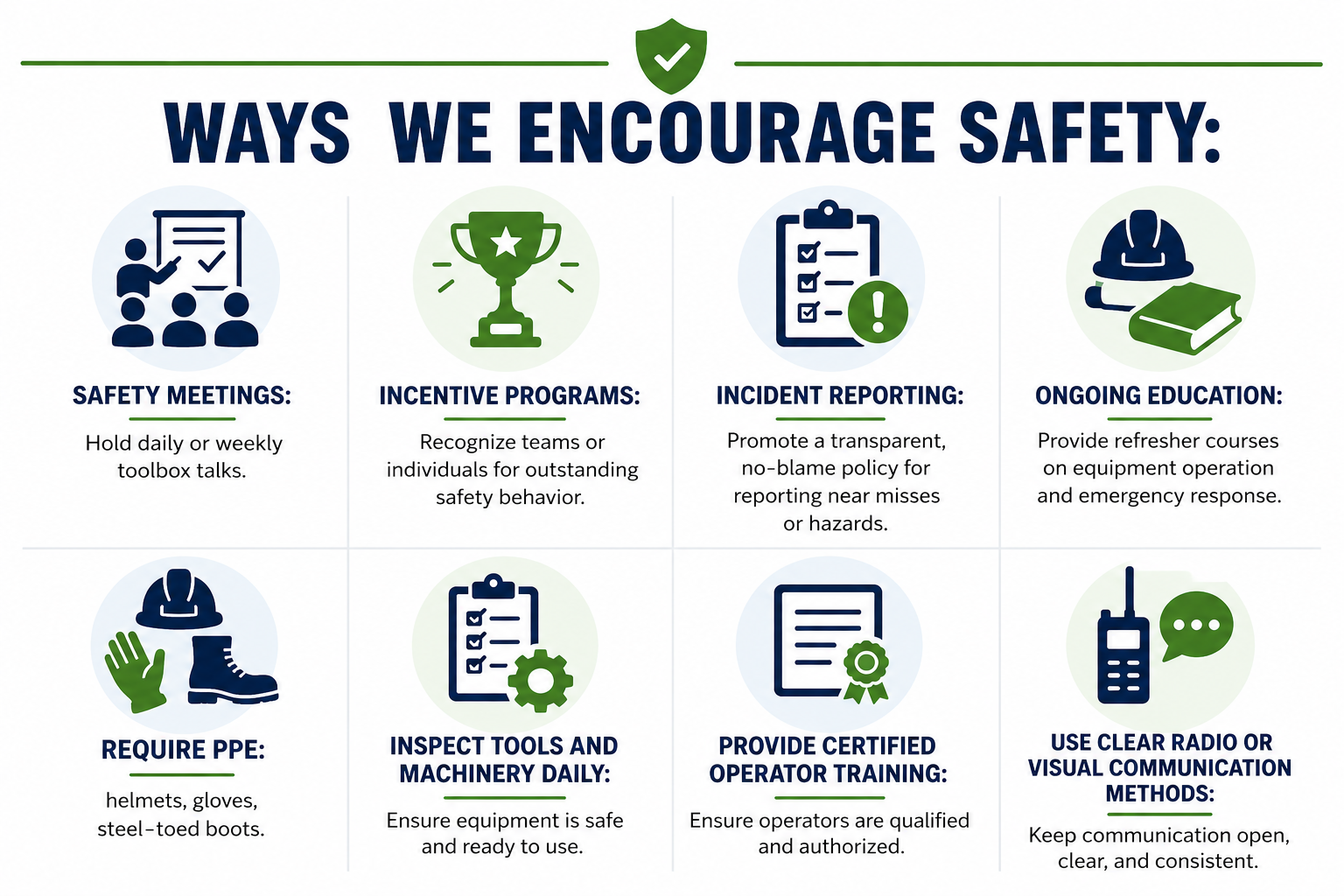
In today’s dynamic construction environment, safety is the backbone of successful project execution. Whether you're managing a new build, digging trenches for infrastructure, installing fencing around pastureland, or erecting windbreaks in the Midwest, the risks are real—but they are also manageable.
By implementing and adhering to best safety practices, ensuring proper training, and maintaining a vigilant approach to heavy equipment and tool use, construction companies can protect their workers, boost efficiency, and deliver durable, high-quality results. After all, in construction, nothing is more foundational than safety itself.
Trenching Safety Essentials
Trenching is high-risk but essential for laying foundations, utilities, and pipelines. We follow these protocols:
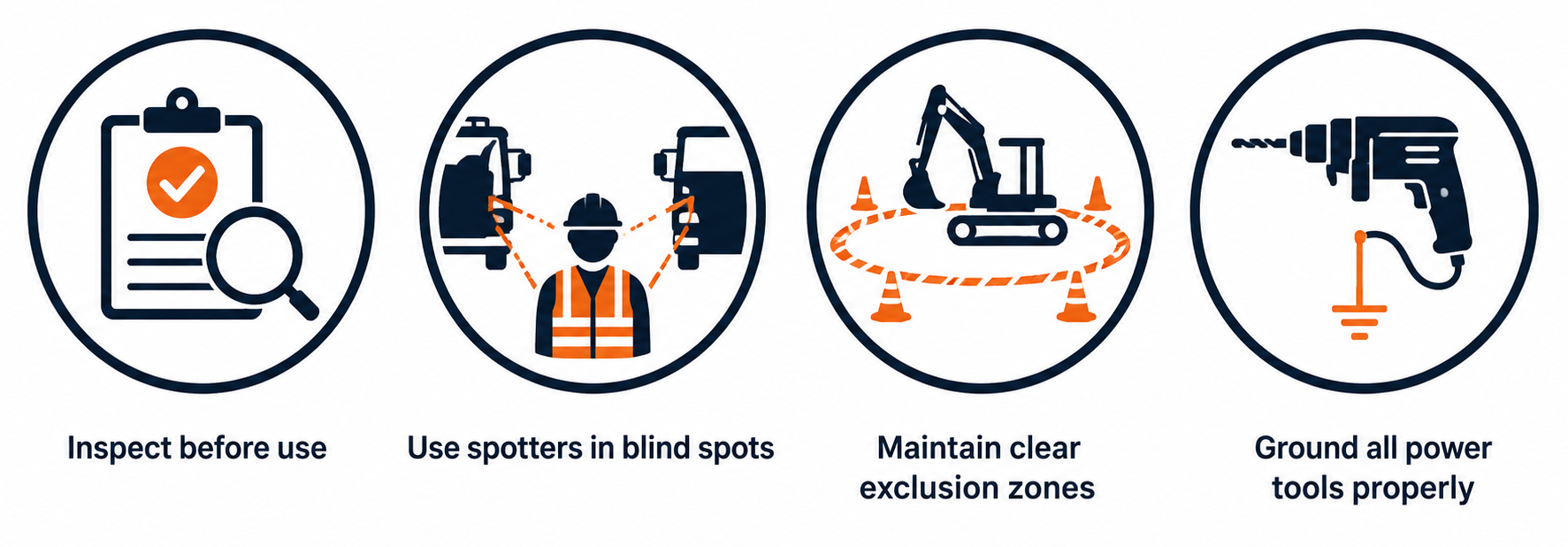
Using Heavy Equipment and Tools Safely
Across all construction types, machinery and tools must be used properly:
Building a Culture of Safety
Safety isn’t just about gear—it’s about people:
Host regular Job Safety Analysis (JSA)
Conduct regular Job Hazard Analysis
Reward safe practices